
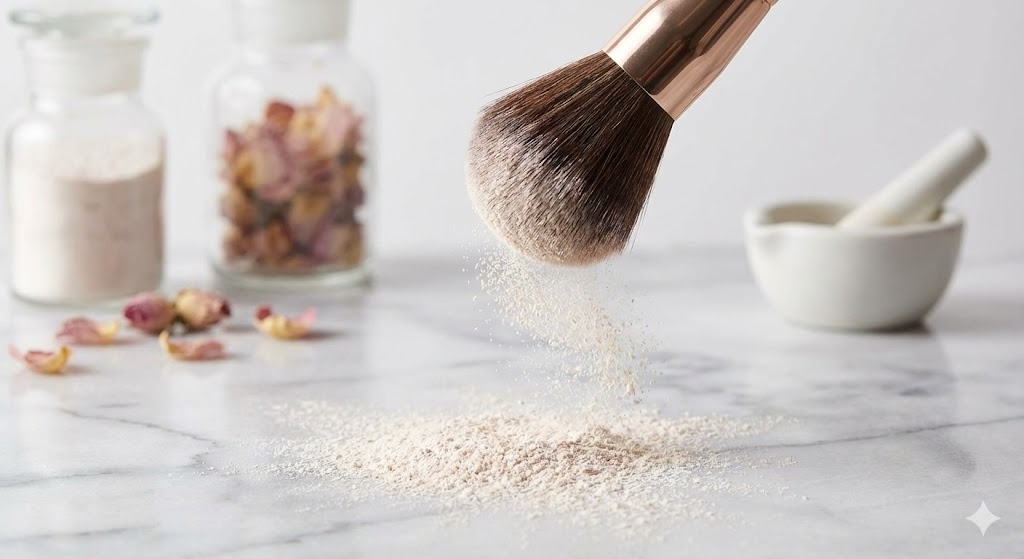
Hello! If you pick up almost any powdered makeup product—be it a high-end pressed powder, a silky blush, or a daily eyeshadow—you will likely find “Talc” listed as the very first ingredient. It is the backbone of the beauty industry, prized for its unparalleled softness and ability to carry color.
However, for cosmetic formulators and brand owners, sourcing cosmetic grade talc is not just about texture; it is about safety and trust. With global scrutiny on purity, you need a partner who guarantees quality without compromise.
At Winstone Technology, we are a dedicated manufacturer based in Thailand. We understand that when it comes to products applied to the skin, there is no room for error. We produce high-purity, asbestos-free talc under strict Asian GMP standards, ensuring that your beauty products are as safe as they are luxurious.
What Defines “Cosmetic Grade” Talc?
Not all talc is created equal. Industrial talc used in tires or roofing feels very different from the powder used on your face. Cosmetic grade talc is the highest quality tier of the mineral hydrated magnesium silicate.
To qualify as cosmetic grade, the mineral must meet rigorous criteria:
- Extreme Softness: It must provide a “creamy” or “silky” feel (known as slip) when applied to the skin.
- High Purity: It must be free from chemical contaminants and heavy metals.
- Microbiological Safety: It must be free from bacteria and pathogens.
- Asbestos-Free: This is the most critical safety requirement.
The Asbestos-Free Guarantee: Our Top Priority
We know the first question you have: “Is it safe?” At Winstone Technology, we have a zero-tolerance policy regarding asbestos.
Asbestos and talc are naturally occurring minerals that can sometimes form near each other in the earth. A responsible cosmetic grade talc manufacturer must rigorously select mines where talc deposits are pure and distinct from asbestos.
- Source Selection: We only process ore from certified sources known for their purity.
- Rigorous Testing: We conduct frequent, stringent testing in our laboratories to ensure our products are 100% Asbestos-Free.
- Transparency: We provide documentation and Certificates of Analysis (COA) to prove the safety of our materials.
Asian GMP: Manufacturing Hygiene You Can Trust
In the cosmetic industry, hygiene is everything. You cannot produce face powder in a dirty factory.
Winstone Technology operates under Asian GMP (Good Manufacturing Practice) standards for our cosmetic lines.
- What this means: We adhere to strict guidelines regarding facility cleanliness, personnel hygiene, and process control. This ensures that the talc is free from physical and biological contamination.
- Why it matters: While we do not operate pharmaceutical clean rooms (which are necessary for injectable drugs, not makeup), our Asian GMP standards provide the high level of sanitation required for safe personal care products.
The Role of Talc in Beauty Formulations
Why is talc so essential to the cosmetic industry? It offers a unique combination of functional properties that synthetic alternatives struggle to match.
1. Superior Texture and “Slip”
Talc is the softest mineral on earth. Its platy particles slide over one another, giving makeup that luxurious, velvety glide (slip) when applied to the skin. It makes blending eyeshadows and blushes effortless.
2. Adhesion and Wear
Talc is naturally hydrophobic (repels water) and lipophilic (loves oil). This allows makeup to adhere to the skin’s natural oils, improving the “staying power” of foundations and powders throughout the day.
3. Oil Absorption and Mattifying
For face powders and dry shampoos, talc is excellent at absorbing excess sebum (oil) and moisture without drying out the skin, leaving a soft, matte finish.
4. Color Dilution
In highly pigmented products like eyeshadows, talc acts as a diluent. It allows the pigment to be spread evenly, ensuring the color in the pan translates accurately to the skin without being patchy.
Key Applications for Our Cosmetic Grade Talc
Our manufacturing lines produce specific grades tailored for various beauty sectors:
- Loose and Pressed Powders: The primary ingredient for setting makeup and reducing shine.
- Liquid Foundations: used to add body and improve the sensory feel of the emulsion.
- Blush and Bronzers: Ensures smooth application and blendability.
- Baby Powder: Provides a protective, low-friction barrier to prevent chafing and irritation.
- Dry Shampoos: Absorbs grease from hair roots.
- Deodorants: Absorbs moisture and provides a dry feel.
Winstone Technology: Manufacturer vs. Trader
Why should you source your cosmetic grade talc from Winstone Technology instead of a general chemical trader?
- Direct Control: As the manufacturer, we oversee the milling and micronization process. We can control the particle size to be ultra-fine (for a transparent finish) or slightly coarser (for better coverage).
- Traceability: We know exactly where our ore comes from and how it was processed. Traders often buy from multiple sources, leading to inconsistency.
- R&D Support: Our technical team can work with your formulators to create a grade that matches your specific texture requirements.
Product Specifications: The Cosmetic Series
We offer premium grades specifically designed for the personal care industry.
| Product Code | Whiteness (Hunter Lab L*) | Particle Size D50, D97 (Micron) | Key Feature |
| WIN7A17R (P0331007030H) | 96 min. | 3±2, 7±3 | Ultra-Fine, High Slip, GMP Grade |
- High Whiteness (96% min): Ensures that the talc does not alter the color of your pigments, allowing for true-to-color formulations.
- Fine Particle Size (D50 = 3 micron): Provides an exceptionally smooth, non-gritty feel, making it invisible on the skin.
Frequently Asked Questions (FAQs)
1. Is your cosmetic grade talc suitable for baby products?
Yes. Our cosmetic grade talc is produced under Asian GMP standards and is tested to be asbestos-free and microbiologically pure, making it safe for use in baby powders to prevent diaper rash and chafing.
2. Do you have a clean room facility?
We operate under strict Asian GMP standards, which ensure a highly controlled and hygienic environment suitable for cosmetic manufacturing. We do not use pharmaceutical-grade clean rooms as they are not required for topical cosmetic powders, helping us keep costs reasonable for our clients without compromising safety.
3. What is the difference between industrial and cosmetic talc?
The difference lies in purity and processing. Cosmetic talc undergoes stricter quality controls for heavy metals, asbestos, and microbiology. Industrial talc focuses on physical reinforcement properties and does not meet the safety standards for human skin contact.
4. Can you provide samples for formulation testing?
Absolutely. We encourage R&D teams to test our talc in their formulations. Contact us to request a sample of our cosmetic grades.
5. Are your products compliant with ASEAN Cosmetic Directives?
Yes, as a Thai manufacturer, our products meet the standards required for the ASEAN cosmetic market, as well as international safety standards.
Contact Us for Safe, Silky Cosmetic Talc
Don’t compromise on the safety or texture of your beauty products. Partner with a manufacturer who prioritizes purity. Contact Winstone Technology today.
China Trading (Bangkok) Co., Ltd. / Winstone Technology Co., Ltd.
- Address: 109/4, 109/25, 109/26 Moo 9, Soi Wo Po O. 11 (Suanluang 13), Settakit Road, Tumbon Suanluang, Amper Krathumban, Samuthsakorn 74110, Thailand.
- Mobile: (66) 086 990 1066, (66) 097 037 3585
- Email: small.lampg@gmail.com
- Line ID: 0869901066
- Website: https://winstonetechnology.com/
References
- Personal Care Products Council. (n.d.). Talc Used in Cosmetics. https://www.cosmeticsinfo.org/ingredients/talc/
- U.S. Food and Drug Administration (FDA). (2024). Talc. https://www.fda.gov/cosmetics/cosmetic-ingredients/talc
- Cosmetics Europe. (n.d.). Understanding Cosmetic Ingredients. https://cosmeticseurope.eu/